Resources & Recommendations for Academic Workers
Faculty First Responders research has found that 40% of faculty members targeted by the right-wing “news” site Campus Reform in 2020 received threats of harm following publication of stories about them. After a politically-motivated attack begins, the situation can spiral fairly quickly, so it is best to take a number of early precautions.
Faculty First Responders have compiled our best advice into this very abbreviated resource guide for academic workers.
Best Additional Resources
The resource guides here are absolutely invaluable, and so we list them first.
If you are experiencing doxing, please access this resource from PEN America.
As soon as you have finished reading what we have to say, please review these as well:
- The American Association of University Professors’ (AAUP) Academic Freedom Field Guide.
- The AAUP Center for the Defense of Academic Freedom First Aid Kit.
- The Library Freedom Project’s Free Resources page for a wealth of information about how to protect yourself online and from doxing.
- The Electronic Frontier Foundation’s Surveillance Self-Defense suite will give you almost everything you need to know on digital security.
- PEN America’s Online Harassment Field Manual
- The Digital Defense Fund’s resources for learning
- Two timely guides on “How to Enter the US with Your Digital Privacy Intact” and “Crossing the US Border? Here’s How to Protect Yourself” for those entering or re-entering the United States.
Recommended Practices at All Times
A. Build Your Network
- Join your union if you have one, or consider organizing a union on your campus.
- Join the American Association of University Professors (AAUP). All scholar-teachers are eligible to join AAUP, and all AAUP members are now AFT (American Federation of Teachers) members as well, making them eligible to access AFT member benefits, including small amounts of legal services and counseling.
- Have your union representative’s and/or your AAUP chapter‘s current contact information on hand.
- Know how to contact your institution’s ombudsperson, and understand their roles and reputation on your campus.
- Talk with friends and family about support you might need if you become the target of politically-motivated harassment. Share this guide with them.
B. Know the Policies
- Bookmark links to your institution’s faculty and employee handbooks and, if applicable, collective bargaining agreements. Identify the sections in each that address academic freedom, free speech, health and safety, and related issues.
- Compile a database or library of faculty/staff senate resolution and other institutional documents related to academic freedom, employee free speech, and the teaching of controversial topics.
- If possible, collaborate with others on your campus (through a union, AAUP chapter, or any other academic worker collective) to develop something like an “Academic Freedom Resource Guide” specific to your institution. It should contain all the above documents, and it can be shared as simply as a Google Drive folder.
- Familiarize yourself with the most relevant AAUP policies and statements. Among these should be the 1940 Statement of Principles on Academic Freedom and Tenure and the 1966 Statement on Government of Colleges and Universities.
- Familiarize yourself with relevant statements from academic unions.
C. Strengthen Your Digital Security
- Consult the curated list of digital security resources included in the Center for the Defense of Academic Freedom (AAUP)’s Academic Freedom Field Guide.
- Use strong, complex, unique passwords and passcodes for each of your accounts and devices.
- Employ a password manager like 1Password or BitWarden to manage your passwords for you. Do not use your web browser to save passwords.
- Enable two-factor authentication whenever possible.
- Provide fake answers for security questions, and keep a log of these answers.
- Install software updates as soon as they arrive.
- Restart your devices regularly.
- Back up your data frequently to both the cloud and a physical external hard drive. The most secure and private cloud storage is Proton Drive.
- Use encrypted messaging and calling services for sensitive activities. The best is Signal.
- A personal Zoom account (not your work account) is a secure site for online meetings.
D. Improve Your Online Privacy
- Search your name on common search engines and document what info is available about you online. Remember to put “your name” in quotation marks to search it as a phrase.
- Set up a Google Alert for your own name to track media mentions. Use quotation marks around your name to narrow the search results.
- Opt out from data broker sites that display your personal info (address, phone number, etc.). The best practice here is to begin by manually opting out of the places where your info appears, and then using an identity protection service for maintenance thereafter. To manually opt out from data broker sites, use a search engine and careful searching to determine where your data appears online. Then, refer to the Big Ass Data Broker Opt Out List (yes, the best resource really is called that), and follow the instructions to opt out from all places where your data is published. Give yourself a day or two for this task.
- If you have the resources, employ an online identity protection service like Incogni or DeleteMe, but know that these services may only catch about 70% of your published data. That’s why it’s a good idea to start with a big ass manual opt out before using such a service.
- Set all social media accounts to their maximum privacy settings.
- State in your social media bios that the views expressed there are your own and do not represent your employer (no need to name the employer).
E. Use Campus Devices and Services Mindfully
- Maintain at least two email accounts: your institutional (work) email and a personal email account.
- Never use campus email, devices, or wi-fi for organizing, political, or other sensitive activities. Even if you feel you have “nothing to hide” from your employer, legal discovery, or a public records request, it is also your responsibility to protect your contacts’ privacy and security.
- Instead, invest in a paid VPN (virtual private network) or use the Tor browser.
- Bottom line, use employer-provided resources only for work-related activities. Imagine anything you do on campus email, devices, or wi-fi could be accessed by someone else at some date.
F. Cover Your Liabilities
- Consider purchasing professional liability insurance, which can help cover legal expenses that might accrue as a result of targeted harassment. Members of AAUP and AFT are eligible for occupational liability plans as a member benefit.
- Check whether your union or professional organization offers free or discounted legal advice. Members of the AAUP and AFT can consult with a lawyer for a half hour for free and purchase discounted legal services.
- If you need to find legal representation, the AAUP’s Center for the Defense of Academic Freedom provides resources on how to find legal support, including about issues of immigration.
- Work with colleagues and administrators to create a campus response plan for instances of politically-motivated harassment within the institution’s community. Excellent resources for creating such a plan may be found in the Researcher Support Consortium’s resources for institutions. Additionally, UMass Amherst’s Harassment Response and Prevention Plan is a great model, as is the University of Iowa’s Faculty Support and Guidance document. Even a department-level response plan can be incredibly helpful.
If Contacted for Comment
- When contacted for comment by a journalist, research the publication they work for before responding. A basic Google search should give you a good sense of the topics they cover and the types of stories they publish, as well as what the journalist has previously written.
- Ignoring right-wing “news” outlets is a completely reasonable response. These venues are designed to provoke outrage at higher education workers whose speech they disagree with. Responding to their requests for comment can serve to legitimize them.
- If interested in providing comment, do so in writing.
If a Story Is Published about You
- Contact trusted colleagues, administrators, and/or supervisors to inform them of the story and ask for their support. If helpful, provide them with the FFR Resources for Administrators link.
- Contact your union representative, AAUP chapter, and/or ombudsperson, inform them of the story’s publication, and ask for their support and advice.
- Follow guidelines for Protecting Yourself during Online Harassment Attacks.
If Things Get Ugly
- If your private or personally identifiable information has been made public (if you’ve been doxed), review the dox defense resources provided by the AAUP’s Center for the Defense of Academic Freedom.
- Ask friends and colleagues for help with your communications. They can filter hateful messages from your email and social media. Ask them to save the emails, phone recordings, and screenshots as a record, but they don’t need to share the content with you. Consider forwarding copies to relevant administrators so that they are aware of the extent of the harassment.
- Consult Right To Be’s Storytelling Project, which provides a platform for people targeted in online harassment to share stories and resources.
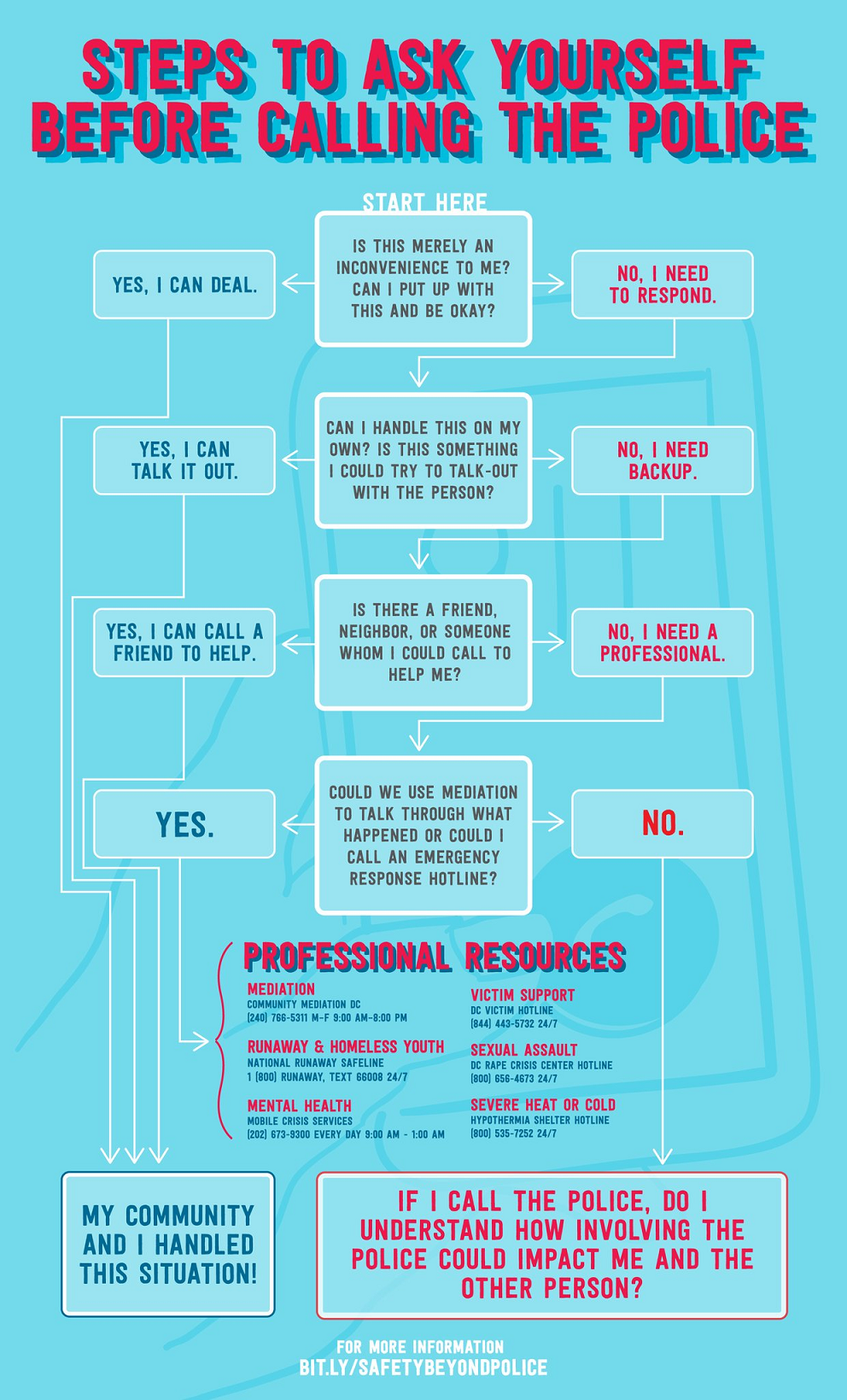
- If desired, consult and contact campus safety resources. You may also consider alternatives to involving safety officers. Here are alternatives to the police in major cities.
- Be aware that sending a threatening email is “unlawful communication.”
- Companies such as Norton LifeLock and DeleteME (paid security services) can locate sites containing your personal information and remove it from the internet.
- If you are an AFT or AAUP member and need some mental health support, consider taking advantage of their Talkspace therapy member benefit and/or trauma counseling member benefit. Being bullied, harassed, or threatened in or around the workplace (and we understand that to include threats made via institutional email addresses, phones, etc.) is a qualifying event for the AFT/AAUP trauma counseling benefit.
- If you feel that you need to record any of your interactions with students, administrators, reporters, or others, consult this guide to the legality of recording in different states.
If Your Institution Does Not Protect Your Academic Freedom
- Contact your union, AAUP chapter, and/or faculty senate committee charged with issues of academic freedom.
- Contact facultyfirstresponders@gmail.com.
 Faculty First Responders